Category : Dental Implants

How Do Dental Implants Work at a Dentist in Columbia, SC?

Introduction

Most patients visiting their dentist for dental implants are often focused on the final result – a tooth replacement that looks natural, feels secure, and helps restore confidence. 

Most patients are surprised to learn how much happens before that final tooth is ever placed.

Dental implant treatment is not designed to be completed in a single appointment, unlike a filling or crown. There’s a process to this, and each step has a reason

Some patients visiting their dentist for dental implants in Columbia, SC, often ask, “Why is this measured in months of treatment?” 

While others want to know what happens in between the day the implant is placed and the day the new tooth is attached. These are some of the most common questions dentists receive during implant consultations.

Therefore, this blog takes a closer look at how dental implants work via topics like:

  • Why implant treatment takes time
  • What happens during each stage of treatment
  • Benefits of replacing missing teeth with dental implants

So continue reading as we learn more about the role of dental implants in the following sections. 

Why Implant Treatment Doesn’t Happen in One Visit

Dental treatments are often quite simple.

  • Filling a cavity 
  • A damaged tooth is capped with a crown 
  • Patients come in for treatment and go home the same day after the procedure.

Dental implants operate differently, depending on the role they play. A dental implant is not just a replacement tooth. It lays the groundwork for future restoration.

The implant is placed into the jawbone, and the body needs time to adjust. The surrounding bone begins to bond gradually to the surface of the implant. This process, called osseointegration, is why implants can remain stable for years after treatment.

During the healing period, the implant is supported to ensure it functions properly.

Sometimes patients ask why the final crown can not be placed right away. In some cases, temporary restorations may be used, but in most cases, proper healing is required before the permanent restoration is placed.

You can think of it as building a house. The final structure may be the most visible, but it all depends on the strength of the foundation underneath. The treatment of implants is based on a similar principle.

How the Process Looks


  1. Determining Whether an Implant Is the Right Fit

    Every implant journey begins with a consultation. Your dentist in Columbia, SC, evaluates the teeth, gums, and jawbone to determine whether implant treatment is appropriate. Digital imaging helps identify available bone and reveals details that may not be visible during a standard examination. Patients often use this visit to discuss concerns, ask questions, and learn more about the timeline involved.

  1. Creating the Foundation

Once treatment planning is complete, the implant is placed into the jawbone. The implant itself is a small titanium post that functions as an artificial tooth root. While patients eventually focus on the visible tooth above the gums, this stage is entirely about building a stable foundation beneath the surface. The procedure is carefully planned to ensure proper positioning and support.


  1. The Healing Phase

This is usually the longest part of the treatment. Over the following months, the jawbone gradually bonds with the implant. During this time, patients continue with their normal routines while healing progresses beneath the gums.Many people feel ready for the final restoration long before the implant is ready. That’s completely normal, as healing may not be the most exciting stage, but it plays a major role in the overall success of treatment.


  1. Preparing for the Restoration

After healing is complete, the implant is evaluated to ensure everything has progressed as expected. A connector piece known as an abutment is attached. While small, this component serves an important purpose. It connects the implant beneath the gums to the restoration that will eventually sit above it.


  1. Completing Your Smile

The final step is attaching a custom-made dental crown. The crown is designed to match the surrounding teeth as closely as possible in shape, size, and color. 

    Once placed, it restores both appearance and function. For many patients, this is the point where the process of tooth replacement in Columbia, SC, finally feels real.

    At A Glance

    Who Qualifies?Dental implants are perfect for replacing missing teeth while supporting long-term oral function. 
    Process OverviewStep 1

    Schedule a visit with your dentist for a complete oral examination.

    Step 2 

    Once the examination is over, the doctor will place a post in your jaw.

    Step 3 

    Once the post is healed, the implant and crown will be placed to fix your smile. 

    TimelineHealing timelines vary, but integration typically takes several months.
    AftercareFollow your dentist’s advice on regular eating and other habits for faster recovery.
    Location & ContactCarolina Smiles Family Dentistry

    3244 Sunset Blvd, West Columbia, SC 29169, United States

    Why Patients Choose Dental Implants

    • Designed for A Stable Smile:

    Stability is one of the reasons patients seek out implants. The implant is a fixed object in the mouth, as opposed to a removable option. This can make everyday things like talking and eating seem more normal and predictable.

    • Does Not Need Adjacent Teeth:

    Some tooth replacement options require support from surrounding teeth. Dental implants are a stand-alone treatment. This means that often there is no need to treat the surrounding healthy teeth.

    • Spreads Bite Pressure Equally:

    When someone chews, the force is shared across several teeth. Replacing a missing tooth fills the gap, restores balance to the bite, and helps the mouth work more efficiently in daily activities.

    • Supports Comfort Every Day:

    Many patients forget about their implant altogether over time, and that is often the goal. The best implants in Columbia, SC, become a part of your daily life. 

    • Can Replace A Lost Tooth:

    Not every patient has multiple missing teeth; most of the time, one implant is enough to restore both appearance and function, without disturbing the rest of the smile.

    Dental Implant Care for the Columbia Community

    Practical matters are often of concern to patients in Colombia before beginning implant treatment.

    Some people want to know whether they’ll be toothless while healing occurs. Others are more concerned about how many appointments are involved or how recovery fits in around work while learning more about Carolina Smiles dental implants.

    These questions are quite natural.

    At Carolina Smiles Family Dentistry, our focus is on educating the patient about the process before any treatment decisions are made. Knowing what happens at each stage often makes the experience less scary and more predictable.

    FAQs

    1. How long do dental implants last in Columbia, SC?

    With the right care and regular dental checkups, dental implants can last many years and often for decades.

    1. What is the dental implant procedure like?

    The process typically includes consultation, implant placement, healing, and attachment of a custom restoration.

    1. Who is a candidate for dental implants?

    Treatment may be possible for many healthy adults who have lost teeth and have enough jawbone to support implants.

    1. How much do dental implants cost in Columbia, SC?

    The exact cost will depend on how many implants you need and whether you need any additional procedures.

    1. What is the recovery time for dental implants?

    Most patients are able to return to their daily activities within a few days; however, it takes several months for complete healing and integration.

    Conclusion

    While the success of many dental procedures depends solely on what happens during the procedure, the success of dental implants depends on what happens afterward. The healing stage is as important as it is neglected in establishing a stable foundation for the final restoration.

    Implant treatment is an opportunity for patients with the absence of one or more teeth to restore function, improve comfort, and regain confidence in everyday situations. The process takes patience, but each step is intended for long-term success.

    Ready to fix your smile? Connect with our dentists at Carolina Smiles Family Dentistry today!
    Maintaining Your Dental Implants: Top Care Tips for Long-Lasting Results in Columbia, SC

    Summary:

    Dental implants have revolutionized the traditional approach to replacing missing teeth. 

    They offer a more natural-looking, durable solution that restores both the function and gives you an instant boost in confidence. For individuals seeking dental implants in Columbia, SC, it is essential to understand how to properly care for these restorations. 

    Even though dental implants are designed to be a long-term partner, their healthy life span is completely dependent on how well they are taken care of. This article simplifies the tedious task of dental implant care. We will cover:

    • Why Dental Implant Care Matters
    • Daily Oral Hygiene Habits 
    • Lifestyle Choices That Support Implant Longevity

    Continue reading to learn more about the role of dental implants in enhancing your smile. Let’s get started. 

    Why Dental Implant Care Matters

    Implants Work Like Natural Teeth

    Dental implants are known to behave exactly like your natural teeth. They feel, look, and function just like a normal set of teeth would. This is the reason they have become so popular among individuals. But because it feels so natural, it does not imply that you forget about it and stop taking care of them.

    The Risks of Neglect

    Skipping regular dental check-ups and proper hygiene can have a serious negative impact. Certain issues, such as implantitis, a term used to describe gum inflammation around an implant, can develop and eventually lead to bone loss. In fact, in the worst-case scenario, the entire implant could fail, which would undo all the progress you have made.

    Specialized Care in Columbia, SC

    Fortunately, patients in Columbia, SC, have access to skilled dentists who are not only experts in implants but also guide them through the entire care process. With the support of the professionals, you can now enjoy your beautiful smile without any hassle. 

    Daily Oral Hygiene Habits 

    Caring for dental implants involves more than just regular brushing and flossing. It is crucial to maintain a thorough oral hygiene routine, which includes:

    • Brushing Daily: When brushing your teeth, use a soft-bristle toothbrush and non-abrasive toothpaste. They are best for gently cleaning your implants, natural teeth, and gums without causing any harm. In fact, using an electric toothbrush can be beneficial in removing plaque buildup. 
    • Flossing Daily: Flossing daily is a crucial step in achieving the healthy oral health you strive for. Use dental floss or interdental brushes to clean the areas between teeth and around implants, where bacteria tend to grow. 
    • Rinsing with Mouthwash: Rinsing your mouth, particularly after every meal, helps remove any food particles that may be stuck between your teeth. Rinsing with antibacterial mouthwash can help reduce bacteria and promote healthy gums.

    Regular Professional Care and Checkups 

    Visiting your dental professional regularly after your implant procedure is crucial. Routine visits help the dentist monitor your oral health. During these visits, your dentist will look after:

    • Look for any signs of infection or inflammation and check them promptly to prevent future complications.
    • Regularly visiting your dentist and checking on your implants will help maintain their stability and ensure optimal function.
    • To remove hard plaque or tartar buildup, it is necessary to have a scheduled professional cleaning with your dentist, as these can be stubborn and may not be effectively removed with home remedies alone.

    Regular professional care helps catch any potential issues early and ensures your implants remain healthy over time.

    Lifestyle Choices That Support Implant Longevity

    Getting your implants done is termed as one of the best decisions an individual can make. However, how long they stay healthy completely depends on the care and maintenance one provides for them. 

    Simple dental hygiene habits, such as brushing, flossing, and visiting the dentist regularly, play a significant role in maintaining the health and condition of your implants. If you are seeing a trusted dentist in Columbia, SC, here are some of the key lifestyle tips that can be inculcated for better results:

    Mindful Eating Habits

    • Avoid overly hard or sticky foods – things like hard candies, ice, or caramel can put unnecessary stress on your implants.
    • Choose a balanced diet – one rich in lean proteins, fruits, vegetables, and whole grains- to help your body heal faster and maintain strong gums and bones.

    Watch Out for Stains

    • Limit staining foods and drinks such as coffee, red wine, or dark sauces. Tobacco products can also discolor implants and increase oral health risks.

    Lifestyle Factors That Matter

    • Quit smoking – it reduces blood flow to your gums, slowing healing and increasing implant failure risk.
    • Moderate alcohol – frequent drinking can interfere with bone healing around the implant.
    • Stay active and healthy – regular exercise and overall good health support stronger immunity, better circulation, and long-term implant success.

    Handling Problems Early

    Dental implants are specifically designed to last a long time, but certain issues can sometimes occur. Knowing the symptoms beforehand can significantly reduce the severity of the problem. 

    Signs that You Should Not Ignore

    Given below are some of the signs that, if noticed, should be immediately taken care of:

    • Swelling or persistent discomfort around the implant area.
    • Bleeding or tender gums that don’t improve with gentle cleaning.
    • Mobility or looseness of the implant, which should normally feel secure.

    Why Early Action Matters

    Taking the right actions at the right time can prevent minor issues from escalating into major ones. Early treatment can help:

    • Protect the implant from failure.
    • Prevent bone or gum damage.
    • Save you from more complex and costly procedures down the road.

    What to Do Next

    If you notice any of the symptoms mentioned above, do not wait; contact your dentist immediately. Prompt care enables your implant to stay strong, healthy, and last for many years. 

    Long-Term Care and Maintenance 

    1. Stay Consistent with Oral Hygiene

    The success of your dental implants largely depends on how well you care for them. Brushing twice a day, flossing, and rinsing your mouth with an antibacterial mouthwash help keep your implant in better condition and increase its lifespan. Always remember that taking one step at a time allows you to cover the entire distance.

    2. Adjust with Age and Health Changes

    As our bodies change, so do our oral needs. People suffering from diabetes or those getting older may have a different approach. Visiting your dentist regularly allows them to understand your changing needs and tailor the plan accordingly. 

    Takeaway

    • Brush, floss, and rinse your implants daily to maintain their strength and health.
    • Quit smoking, eat balanced meals, and limit habits that can damage or stain implants.
    • Maintaining your implants can be challenging at first, unless you get the experts to help you. Don’t repeat the same mistakes. Connect with our professionals at Carolina Smiles Family Dentistry today! 

    Carolina Smiles Family Dentistry: Leading Dentists in West Columbia, SC, for Quality Dental Implants

    Summary:

    Are you looking for reliable, compassionate dental care? Carolina Smiles Family Dentistry in West Columbia, SC, is the go-to clinic for quality dental implants. Led by experienced dentists Dr. Morgan Spicer and Dr. Dan Myers, the practice offers state-of-the-art implant services designed to restore both function and beauty to your smile. Learn about the benefits, process, and why dental implants have become a top choice for tooth replacement. Discover how Carolina Smiles combines innovative technology and a family-friendly approach to make your dental care experience exceptional.

    Carolina Smiles Family Dentistry: Leading Dentists in West Columbia, SC, for Quality Dental Implants_1

    Carolina Smiles Family Dentistry: A Commitment to Quality Care

    Carolina Smiles Family Dentistry, Dentists in West Columbia, South Carolina, has established itself as a pillar of trusted dental care in West Columbia, SC. Even though the name may be new, the dedicated team and family-friendly approach remain the same. Dr. Morgan Spicer and Dr. Dan Myers lead the practice, bringing a wealth of expertise to help you achieve a radiant, healthy smile. With a broad array of services, including advanced dental implants, Carolina Smiles supports patients through every stage of dental care, whether routine cleanings or life-changing implant procedures.

    Understanding Dental Implants: The Ultimate Solution for Missing Teeth

    Dental implants have become the preferred option for those seeking long-term solutions for missing teeth. Unlike traditional dentures or bridges, dental implants are anchored directly into the jawbone, offering a secure, natural-looking result that functions like your original teeth.

    Key Benefits of Dental Implants:

    • Longevity: With proper care, dental implants can last a lifetime, providing a solid, permanent solution for missing teeth.
    • Natural Appearance: Implants are custom-made to match the color, shape, and size of your existing teeth, making them virtually indistinguishable.
    • Improved Comfort and Stability: Unlike dentures, implants are firmly fixed, allowing you to eat and speak confidently.
    • Jawbone Health: Implants stimulate bone growth, which prevents bone loss and helps maintain facial structure.

    Fun Fact: Did you know that dental implants are made of titanium, the same metal used in space shuttles? This material’s durability and strength make it ideal for dental implants.


    Why Choose Carolina Smiles for Dental implants in Columbia, South Carolina?

    With a commitment to excellence and patient-centered care, Carolina Smiles Family Dentistry is the top choice for Dental implants in Columbia, South Carolina. Here’s what sets them apart:

    • Experienced and Compassionate Dentists in West Columbia, South Carolina 
    • Meet the Team: Dr. Morgan Spicer and Dr. Dan Myers bring years of experience and a friendly, compassionate approach to dental care. They understand the importance of personalized care, especially for patients undergoing complex procedures like implants.
    • Comprehensive Expertise: Dr. Spicer and Dr. Myers are trained in the latest implant techniques, ensuring safe and effective results.


    •  Advanced Technology and Precision

    Carolina Smiles utilizes cutting-edge 3D imaging technology to plan every implant placement. This technology allows for:

    • Accurate Treatment Planning: 3D imaging provides a detailed map of your jawbone structure, ensuring each implant’s perfect fit and positioning.
    • Minimal Invasiveness: Thanks to advanced imaging, the implant procedure is highly targeted, minimizing recovery time and enhancing comfort.


    • Customized Treatment Plans

    No two smiles are alike, so Carolina Smiles designs individualized treatment plans. This approach ensures patients receive the necessary care, from pre-treatment consultations to personalized follow-up care.

    Carolina Smiles Family Dentistry: Leading Dentists in West Columbia, SC, for Quality Dental Implants_2

    The Implant Process: What to Expect

    Step 1: Consultation and Assessment

    During your initial consultation, Dr. Spicer or Dr. Myers will evaluate your oral health, review X-rays, and discuss your goals. This thorough assessment determines your candidacy for dental implants.

    Step 2: Customized Treatment Plan

    The Carolina Smiles team will create a tailored treatment plan outlining each step, from implant placement to recovery. Using 3D imaging, they’ll precisely plan the position of each implant, ensuring an optimal outcome.

    Step 3: Implant Placement Procedure

    The implant surgery is performed in the office under local anesthesia, ensuring maximum comfort. Titanium posts are inserted into the jawbone to act as roots for the artificial teeth, with healing taking several weeks as the bone integrates with the posts.

    Step 4: Restoration

    Once the implants have bonded with the bone, your dentist will attach a custom crown or bridge, restoring your smile. Carolina Smiles takes pride in creating natural-looking restorations to blend seamlessly with your teeth.

    Post-Procedure Care and Maintenance Tips

    Caring for your implants is essential for ensuring their long-term success. Here are some tips from Dentists in West Columbia, South Carolina:

    • Maintain Good Oral Hygiene: Brush and floss regularly to keep the area around your implants clean and free from plaque.
    • Avoid Hard or Sticky Foods: For the initial weeks after your procedure, stick to soft foods to prevent strain on the implants.
    • Regular Dental Visits: Schedule routine check-ups to monitor your implants and oral health.
    • Avoid Smoking: Smoking can hinder the healing process and compromise implant success.


    The Carolina Smiles Dental Savers Plan: Accessible Care for All

    Dental implants can be a significant investment, but Carolina Smiles makes quality care accessible with the Dental Savers Plan. Ideal for families without insurance, this plan offers discounted service rates, ensuring everyone can receive top-notch care without the burden of high costs. 

    With individual and family membership options, the Dental Savers Plan is an in-house program Carolina Smiles supports to make dental health accessible to the entire community.

    Real Patient Success Stories

    Patients at Carolina Smiles frequently share transformative experiences after receiving dental implants. One patient, Mary, had struggled with missing teeth for years before opting for implants. After treatment, she expressed newfound confidence in her smile and reported how much easier daily activities like chewing and speaking had become. Stories like Mary’s reflect Carolina Smiles’ commitment to patient satisfaction and long-term results.

    Carolina Smiles Family Dentistry: Leading Dentists in West Columbia, SC, for Quality Dental Implants_3

    Key Takeaways

    • Experienced Team: Carolina Smiles Family Dentistry, led by Dr. Spicer and Dr. Myers, offers trusted, patient-focused dental implant services in Columbia, SC.
    • Cutting-Edge Technology: The practice uses advanced 3D imaging to enhance precision and comfort in the implant process.
    • Personalized Care: Customized treatment plans meet each patient’s unique needs.
    • Accessible Options: The Dental Savers Plan makes high-quality care affordable, especially for uninsured families.
    • Lasting Results: Dental implants provide a durable, natural-looking solution for missing teeth, helping patients regain function and confidence.

    If you’re considering dental implants and want to experience a caring, professional approach, contact Carolina Smiles Family Dentistry today! Schedule your consultation to explore how dental implants can transform your smile and quality of life.

    Dental Implants And Cost: Everything You Need To Know

    Achieving the perfect smile is priceless! 

    Sadly, many individuals step back when considering a teeth implant due to the price. A majority of individuals continue to stay confused about the overall price of different dental implants.

    In this blog, we take a closer look at:

    • What Are Dental Implants?
    • How Do Implants Work?
    • How Much Do Dental Implants Costs?
    • Costs Of Dental Implants Based On Their Type
    • Why Dental Implants Are an Investment?
    • Does Dental Insurance Cover Dental Implants?

    In the following sections, let’s learn more about the core aspects of dental implants and costs. 

    What Are Dental Implants?

    Missing one or more teeth to injury or gum disease is common! Stats suggest that the average US adult (45-64) misses at least five teeth. 

    But have you ever thought about how they still carry an effortless smile? The solution is dental implants. They are an excellent option for restoring your bite and improving your oral health. Traditionally, a dental implant is described as an artificial tooth root that is permanently placed in the jaw.

    Based on your oral health, the dental implant types can be categorized into three categories: 

    • Endosteal Implants: The most common types of implants are best suited for patients with good jawbone health. 

    Endosteal implants are placeholders shaped like screws. These screws are put into the jaw, which the false teeth fit into. 

    • Subperiosteal Implants: Next, we have subperiosteal implants, a great alternative to endosteal implants.

    These oral appliances rest on the bone instead of being fixed into the jawbone. Dentists mainly place these implants under the gum.

    •  Zygomatic Implants: Last, we have zygomatic implants, the least common dental implant in the market. 

    Generally, this option is performed when you don’t have enough jawbone left for endosteal implants. The dentist places them in the patient’s cheekbone rather than the jawbone.

    How Do Implants Work?

    A dental implant is designed to mimic a false tooth. This appliance settles in your oral cavity like a natural tooth, adding to your bite force and oral health. 

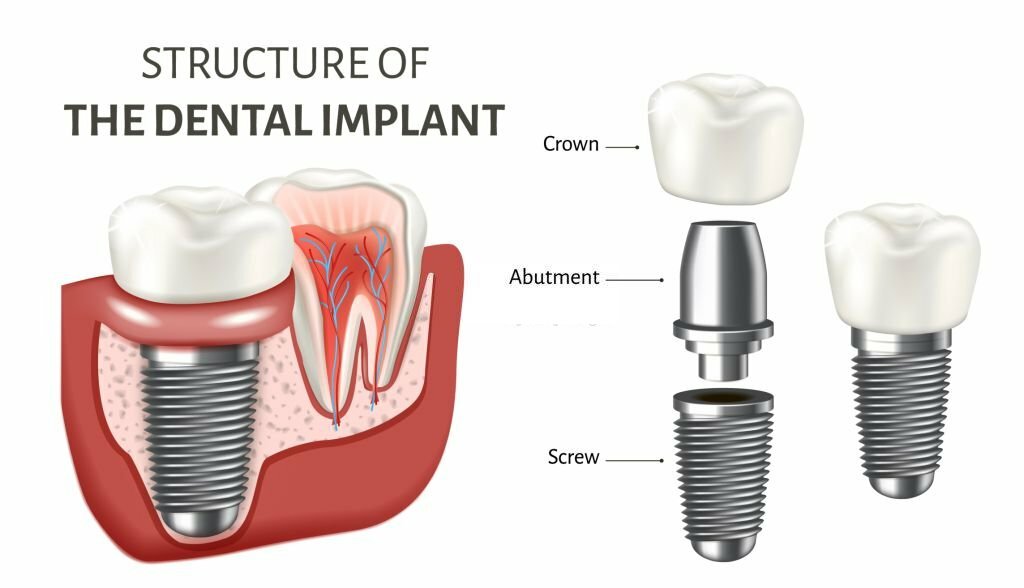
    dental implant structure

    An implant generally consists of three individual parts, each uniquely contributing to your cavity: 

    1. Implant Body:  The implant body is shaped like a metal screw and is often composed of titanium. This implant portion settles into your jawbone to serve as a foundation for the abutment. 
    2. Abutment: The abutment is a metal piece connecting the implant body to the crown. 
    3. Crown: The crown is the visible portion of the tooth that blends with the other teeth in your gum line. 

    So, now that we have an idea of the appliance let’s jump into the dental implant charges in the following section. 

    How Much Dental Implants Costs?

    The cost of dental implants can be fluctuating. Based on the type, a dental implant can cost between $3,500 to $6,700. The cost of these implants includes the device and its surgical placement.

    Similarly, if you plan to cover your full mouth with implants, the costs can be anywhere from $43,000 to $56,000. Interestingly, other factors influence the average costs of dental implants, namely: 

    Medical Expertise: The experience of your dentist is a significant factor adding to the cost of implants. The more experienced practitioners, the higher the fees and less the risk involved. 

    Materials Used: Implants can be designed using several metals, including zirconium or titanium. Your choice of materials and tooth transplant procedure also determines the price of implants. 

    Preparation Procedures: You may be required to undergo bone grafts or tooth extractions before placing the implant. The more operations you require, the more expensive the implant will be.

    Costs Of Dental Implants Based On Their Type

    As mentioned earlier, the cost of dental implants is highly influenced by the type of appliance you opt for. Keeping the same in mind, we’ve listed the prices of a few implants: 

    Mini Dental Implants

    These implants are used to support dentures or as temporary implants. Mini dental implants were never designed to be used for lengthy periods. 

    Cost: $500-$1,000 per tooth

    Standard Dental Implants

    The titanium alloy is used in typical dental implants. Porcelain-fused-to-metal (PFM), max, multilayer zirconia, porcelain-filled composites, complete dental gold, and full-contour zirconia are all options for your dental implant crown. 

    Cost: $3,000-$4,500 per tooth

    All-on-4 Dental Implants

    All-on-4 Dental Implants is a registered trademark for a dental implant method that employs 4-6 titanium implants to anchor dentures to a complete arch (top or bottom). 

    This replacement tooth brand provides both detachable and fixed implant dentures. 

    Cost (removable): $8,000-$17,500

    Cost (fixed): $15,000-$30,000 per arch

    Same Day Dental Implants

    As the name suggests, these implants include dental implant surgery alongside bone grafting and tooth extraction on the same day. This unconventional technique can be successful, but the outcomes are still unknown. 

    Individual dentists achieve a more comprehensive range of outcomes with same-day implants than standard implants inserted 4-6 months after the initial extraction.

    Cost: $5,000-$8,000 per tooth

    Here’s an overview of the prices of different implants and the costs associated with them:

    Type Of Implants Cost
    Mini Dental Implants $500-$1000 per tooth
    Standard Dental Implants $3,000-$4,500 per tooth
    All-on-4 Dental Implants Cost (removable): $8,000-$17,500

    Cost (fixed): $15,000-$30,000 per arch

    Same Day Dental Implants $5,000-$8,000 per tooth

    Why Dental Implants An Investment?

    On the surface, dental implants look incredibly expensive compared to other oral appliances. However, many individuals fail to realize that other alternatives (bridges and dentures) need repair every 5 to 10 years. 

    The cost of such regular maintenance can set you back to a price higher than the cost of tooth implant molar or other areas. Practically, implants are a better option as they can last a lifetime. 

    Does Dental Insurance Cover Dental Implants?

    Some dental insurance policies cover a portion of the dental implant procedure. Unfortunately, many dental insurance companies consider implants an elective cosmetic dentistry operation and may only cover the first extraction and permanent crown. 

    Dental implant costs with insurance include extra expenditures such as implant placement and abutment. It is unlikely to pay more than $1,500 per year, the maximum coverage most conventional dental insurance policies provide.

    To guarantee that your dental insurance covers your implant, your dentist must demonstrate that the implant treatment, extraction, permanent crown, and bone graft become a necessity based on your oral condition. 

    Finally, your insurance company will assess if the treatment was necessary and, if so, how much of the implant they will reimburse.

    Takeaway

    • Stats suggest that the average US adult (45-64) misses at least five teeth. 
    • An implant comprises three parts, each contributing to your cavity.
    • A dental implant can cost between $3,500 to $6,700. 
    • Some dental insurance policies cover a portion of the dental implant procedure.

    A Comprehensive Guide To Dental Implants In Columbia, SC

    Missing tooth or teeth? 

    Life must feel at a halt, isn’t it? Relax, you aren’t alone. Over 156+ million Americans have a missing tooth. 

    Besides, having a chipped or broken tooth or teeth can be disheartening. Missing or lost teeth can affect how you smile and significantly impact what you eat and how you present yourself. 

    But thanks to the applications of implants in dentistry, missing or losing a tooth is no longer a bane. Dental implants are designed to look, function, and feel like natural teeth to give you a confident smile. 

    This blog talks more about dental implants and the procedures they follow to restore your smile. So continue reading as we explore the different aspects of the treatment in the following sections. 

    Dental Implants: Insight Into The Oral Appliance

    As the name suggests, a dental implant is a prosthetic replacement for a lost or missing tooth. An implant comprises three parts: Post, Abutment, and the Crown.

    Let’s have a closer look at these parts in the chart below: 

    Different Parts Of Implant Function
    Part A – Post A post is like a small metal screw surgically placed into the jawbone. This post becomes the base of your artificial tooth to root it in one place. 
    Part B – Abutment Placed between the fixture and your restoration is the abutment. It functions like a ‘connector’ with one side screwed into the post and the other designed to fix with the prosthetic.
    Part C – Crown Crown in the visible part of the tooth coated in white enamel. It is connected to an implant to mimic a natural tooth.

    Based on your oral condition, implants can replace a missing tooth, several adjacent teeth, or all missing teeth in your jaw. The number of implants placed by your dentist in West Columbia, SC, generally depends on your oral health and overall health conditions. 

    So, now that we have an idea of what implants are let’s have a quick overview of the oral procedure in the following section. 

    An Overview Of The Dental Implants Procedure

    Stage 1: Initial Consultation

    The process of dental implants in Columbia, SC, generally begins with an initial consultation. At this stage, the dentist evaluates your current oral health and discusses your expectations from the treatment. 

    If you’re a suitable candidate, the dentist will start by running different examinations and assess the jawbone where they’ll place the implant.

    Stage 2: Treatment Planning

    Once your dentist is assured that you need an implant for tooth, they will develop a comprehensive, tailored plan to match your needs. This plan would walk you through the implants’ number, position, and placement. 

    Following your approval, the team might request your dental plan and proceed with the following stages. 

    Stage 3: Implant Placement

    For the next stage, your dentist will put you under local or general anesthesia (if necessary) to ensure your comfort. During this stage, your dentist surgically places the implants into your jawbone. 

    Based on your oral condition, implants are inclined vertically, in the front of the arch, or at the rear. This strategic placement makes the most of the available bone and increases stability.

    Stage 4: Temporary Prosthetic Teeth

    Following the implant surgery, a temporary set of prosthetic teeth is placed on the implants. These temporary teeth function as an aesthetic replacement until your jawbone has healed entirely in a few months. 

    Stage 5: Osseointegration

    Over time, the implants for teeth undergo osseointegration, a process where your jawbone accepts the implant. Once done, this integration ensures a stable foundation for the final restoration. 

    FYI: Based on your practices, osseointegration can take a few weeks to several months for the implants to fully integrate and prepare for the final restoration.

    Stage 6: Final Restoration

    Once osseointegration is complete, your temporary tooth is replaced by a custom-designed, permanent solution. This final restoration is crafted to match your natural tooth’s color, shape, and bite alignment.

    Am I A Suitable Candidate For Dental Implants?

    Determining whether you’re the right candidate for tooth implantation can be challenging. However, based on the following oral conditions, your dentist can help you find the right answer: 

    Good Oral Health

    Candidates seeking dental implant treatment should have healthy gums and little to no active periodontal disease (periodontitis). To provide a stable and healthy oral environment for the implants, any pre-existing oral health concerns, such as cavities or gum disease, may need to be addressed before the implant operation.

    Overall Health Assessment

    Your overall health and medical background is also a determining factor for dental implants operation. Since specific medical conditions and drugs affect the healing process, revealing any current medical allergies, issues, or drugs is crucial during the initial consultation.

    Sufficient Jawbone Density

    Since they’re fixed to the jawbone, undergoing the dental implant procedure requires you to have an adequate amount of jawbone to support them. Dental professionals generally use CT scans and X-rays to determine your bone density. However, in cases where bone density is insufficient, experts use additional procedures like sinus lift or bone grafting to boost the bone volume. 

    Conclusion

    Dental implants are a great way to regain your lost smile. These oral appliances are the best way to restore lost confidence while improving overall oral health. So, now that you have an idea of the treatment process and its possibilities, when do you plan to visit your dentist in West Columbia, SC?

    Let’s Re-Invent Your Smile

    Carolina Smiles Family Dentistry is your #1 spot for effective dental implant treatment. We bring you years of experience in implant treatments at the most affordable costs. Wait no more; check out our services today!