
Introduction
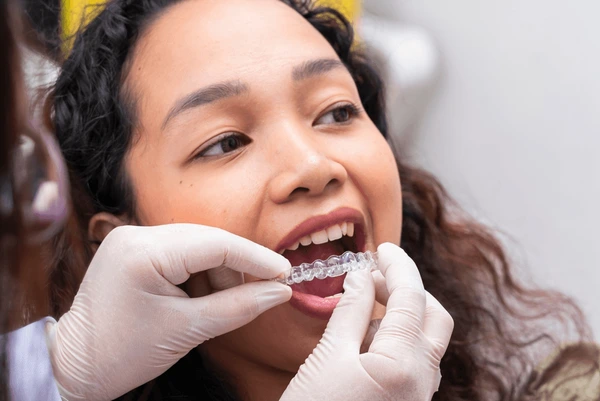
A new Invisalign tray can look almost identical to the one that came before it.
Place them side by side, and the difference may be difficult to spot.
Yet that small difference is the point.
One aligner is not expected to straighten a crowded smile all at once. It represents one stage of a larger plan. The next tray continues from there. Then another follows, with each aligner designed around the position the teeth are expected to reach at that point in treatment.
This is what many patients do not see when they first hear about Invisalign.
The trays are visible.
The sequence behind them is not.
That is why Invisalign is better understood as a planned series of controlled movements rather than simply a clear alternative to braces. Teeth may need to shift, rotate, close spaces, or move in coordination with neighboring teeth. Those changes are mapped across the treatment instead of being left to a single appliance.
For patients researching Invisalign in Columbia, SC, this distinction matters. Clear aligners may look simple when held in your hand, but successful treatment depends on diagnosis, planning, consistent wear, monitoring, and whether the case is suitable for the system in the first place.
In this guide, we explore:
- What Invisalign clear aligners are
- Why teeth move in planned stages
- How the Invisalign process works
So continue reading as we learn more about Invisalign and its role in smile dentistry in the following sections.
Why Is Aligner Treatment Trending?
One of the most significant advantages of Invisalign is that it works in a series, not with a single tray correcting the entire smile. Besides, it is easy to look at a clear aligner and assume the process is straightforward.
- The tray fits over the teeth.
- It applies pressure.
- The teeth become straighter.
That description is not entirely wrong, but it leaves out the most important part: the movement is planned across a series.
A treatment plan may involve multiple teeth moving over time, and those movements may need to happen in a particular order.
For someone exploring clear aligners in Columbia, SC, the trays are therefore only one visible part of the process. The broader treatment plan determines what each stage is intended to accomplish.
How Does Invisalign Treatment Work?
1. Initial Screening
Treatment starts with a discussion of the patient’s concerns. Some people get upset by crowding. Others want to close spaces or undergo teeth straightening in Columbia, SC, after prior orthodontic treatment.
2. Teeth and Bite Examination
The teeth are considered in the context of the smile as a whole.
This could include:
- Crowding
- Spacing
- Analyzing upper and lower bite relationships
- Gum health
- Existing dental treatment (if any)
The goal is to find out what’s wrong and if Invisalign is a good option.
3. Digital Records and Treatment Planning
Depending on the case, we may collect digital scans, photographs, X-rays, or other records.
These records help in treatment planning and are used to map where the teeth are supposed to move.
4. Formation of the Aligner Series
A series of custom aligners is fabricated according to the treatment plan. Each set is a stage in the planned progression.
Patients are instructed when to change aligners and how many hours a day to wear them.
5. Progress Reports
Scheduled dental visits can help review treatment progress.
The dentist can make sure the aligners fit properly, and the teeth respond as expected.
6. Therapy after implementation
A retainer may be recommended once active movement is complete. This stage helps maintain the new tooth positions and protect the work done during treatment.
At A Glance
| Who Qualifies? | Patients with stained teeth or those who require aesthetic improvements are ideal candidates for the treatment. |
| Process Overview | Step 1
An orthodontic treatment generally starts with a visit to your nearest dentist. Step 2 The process is followed by an examination, during which the dentist will check whether you qualify for the treatment. Step 3 After treatment, it’s best to follow the care tips for a quick recovery. |
| Timeline | The timeline for your treatment depends on your chosen orthodontic option. |
| Aftercare | Follow your dentist’s aftercare suggestions for faster recovery. |
| Location & Contact | Carolina Smiles Family Dentistry
3244 Sunset Blvd, West Columbia, SC 29169, United States |
Benefits of Invisalign Treatment
Offers a less visible way to straighten teeth
Clear aligners are less noticeable than the metal braces you’re used to. This may appeal to adults, professionals, and teenagers who are self-conscious about visible orthodontic appliances. The aligners are not completely invisible, but many patients appreciate the more discreet appearance in daily conversations, photos, and social settings.
Can be taken out during meals
Invisalign trays are removable, so patients typically remove them while eating. That means you will have fewer food-related restrictions with appliances than you would with fixed brackets and wires. The big trade-off is remembering to put the aligners back in after eating and keeping up with the prescribed wear schedule each day.
Makes regular brushing and flossing more familiar
Patients with fixed orthodontic appliances may need to modify their cleaning technique around brackets and wires. You can take out clear aligners to brush and floss, so keeping your teeth clean is more like usual. Good oral hygiene is still important, especially because the aligners sit snugly over the teeth for most of the day.
Employs a planned change sequence
The overall goal of alignment in Invisalign treatment is divided into a series of stages. Each aligner is connected to the overall plan and not an independent piece. This step-by-step process can help patients who want to straighten their teeth in Columbia, SC, understand the need for regular wear and timely progress checks.
Invisalign Treatment at Carolina Smiles in Columbia
The visibility of Invisalign often piques patients’ interest.
- The trays are transparent.
- They can be taken out.
- There are no metal brackets showing across the front of the teeth in the usual way.
But determining if Invisalign is right means looking beyond what you can see.
At Carolina Smiles, an Invisalign evaluation considers the patient’s tooth position, spacing, crowding, bite, oral health, and treatment goals before making a recommendation. The planning may also be influenced by the type of movement required and by existing dental work.
FAQs
- How long does Invisalign take in Columbia?
The duration of treatment varies based on the amount and type of tooth movement required, the complexity of the case, and compliance with aligner wear. Some patients may finish treatment sooner than others. A dental evaluation and treatment plan provides a more customized estimate for your personal smile.
- How many hours a day should you wear Invisalign aligners?
Patients typically wear the Invisalign aligners for 20 to 22 hours a day, but it is important to follow your dentist’s recommendations. They are usually removed to eat, clean their teeth, and for other indicated situations and are inserted over clean teeth.
- Is Invisalign better than braces?
Neither option is inherently better for all patients. Invisalign employs removable, less conspicuous trays, while braces may be recommended for more complex or diverse movement needs. The best option will depend on the position of the teeth, bite problems, oral health, lifestyle, and the treatment plan.
- What is the cost of Invisalign in Columbia SC?
The cost of Invisalign in Columbia, SC is determined by the complexity of treatment, the expected duration, and the individual’s clinical needs. A shorter or more limited case may diverge from comprehensive treatment. You need an evaluation to get an accurate estimate of what your smile needs to move.
- Could I be a candidate for clear aligners?
If you have proper crowding, spacing, or other alignment issues and are willing to wear the trays consistently, you may be a candidate. Oral health and case complexity matter as well. Your dentist for Invisalign in Columbia, SC, can help you determine if clear aligners are a good fit for your particular treatment needs.
Conclusion
The most apparent part of Invisalign treatment is also the easiest part to misinterpret.
One aligner fits in the palm of your hand.
What you don’t immediately see is all the things that connect it to the trays that came before and after it.
That sequence is key to how treatment works.
One aligner, one phase. The next is the planned progression. Some teeth may have to move before others can make room to move. Attachments may be used to give additional control where certain movements require it. Regular wear helps to keep the teeth moving through the proper stages.
This is why Invisalign shouldn’t be seen only as a treatment option. Learn more about the procedure with our experts at Carolina Smiles for Invisalign today!